Brisbane’s climate is close to ideal for mould – warm, humid, and prone to sudden downpours that find their way into roof cavities, bathrooms, and poorly ventilated rooms. If you’ve noticed a musty smell, dark spotting on a wall, or unexplained allergy symptoms at home or at work, the question isn’t really “is this mould?” – it’s “how bad is it, and what do I do next?” That’s exactly what mould testing and inspection are designed to answer.
This guide brings together everything property owners, tenants, landlords, and buyers in Brisbane ask us before booking an assessment: what’s actually involved, which testing method applies to your situation, what it costs, and how to pick a provider you can trust.
Mould Testing vs Mould Inspection - They're Not the Same Thing
People use these terms interchangeably, but they describe two different (and often sequential) services. A mould inspection is the visual and moisture-based investigation of a property – checking walls, ceilings, subfloors, and HVAC systems for signs of mould growth or the conditions that cause it. Mould testing goes a step further, using surface swabs, air sampling, or both to scientifically identify and quantify what’s actually growing and how contaminated the air is.
→ For the full breakdown, read our detailed comparison: Mould Testing vs Mould Inspection: What’s the Difference?
What Happens During a Mould Inspection
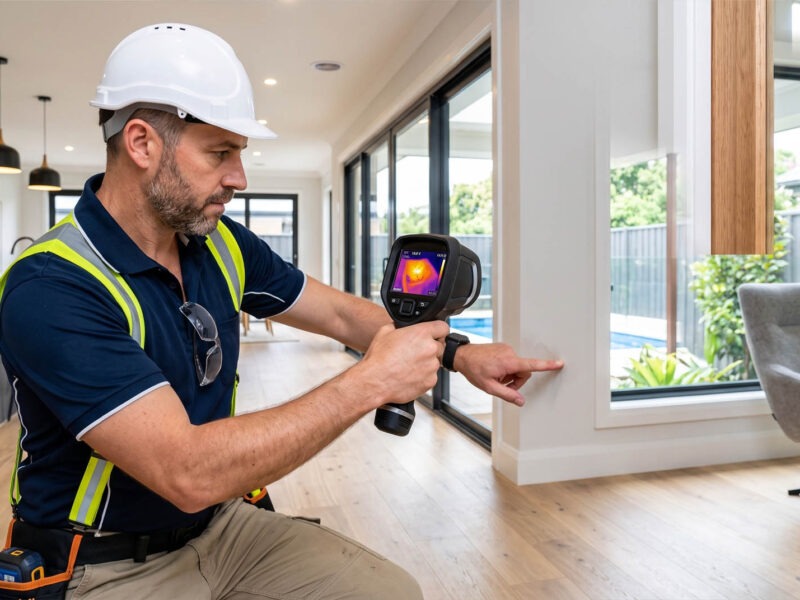
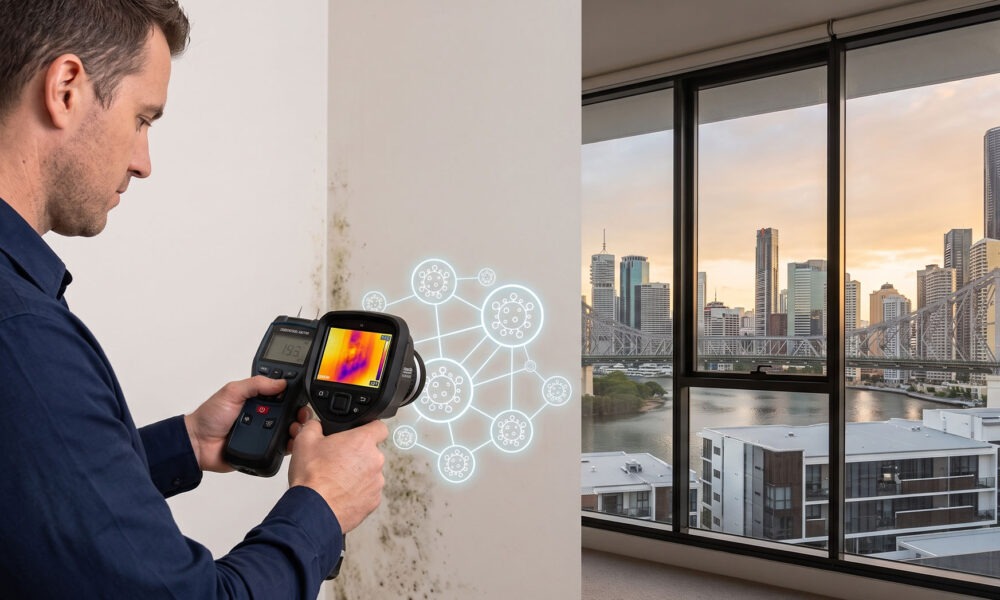
A proper inspection isn’t a five-minute walkthrough with a flashlight. Our occupational hygienists follow a structured process: initial visual survey, moisture and humidity checks with thermal imaging and moisture meters, targeted sampling where contamination is suspected, and a written report with clear findings and next steps.
→ Full walkthrough of the process and what it typically costs: Mould Inspection Brisbane: What Happens During an Assessment (And What It Costs)
Mould Testing Methods Explained
Not every property needs the same test. Surface swabs identify what species of mould is present on a visible patch. Air sampling measures spore concentration in the air you’re breathing – useful when mould is suspected but not visible (behind walls, under flooring). Moisture mapping identifies the underlying cause so the problem doesn’t come back after remediation.
You’ll also come across terms like “Condition 1,” “Condition 2,” and “Condition 3” mould in your report – these are industry classifications (per IICRC S520) describing the extent of contamination, not just a label.
→ New to these terms? Read: Important Definitions for Understanding Mould Reports
Why Is There Mould in My House? (Common Root Causes)
Mould always comes back to moisture – a roof leak, rising damp, poor bathroom ventilation, or condensation from an undersized or poorly maintained air-conditioning system. Identifying the cause, not just the mould itself, is what stops it from recurring after remediation.
→ Read the root-cause breakdown: Why Is There Mould in My House?
Pre-Purchase & Real Estate Mould Inspections
If you’re buying, selling, or managing a rental property, a mould inspection can be the difference between a smooth settlement and a costly surprise six months in. This is a distinct service from a standard residential inspection – timing, scope, and reporting are all shaped by the transaction.
→ Read our guide to pre-purchase mould inspections in Brisbane
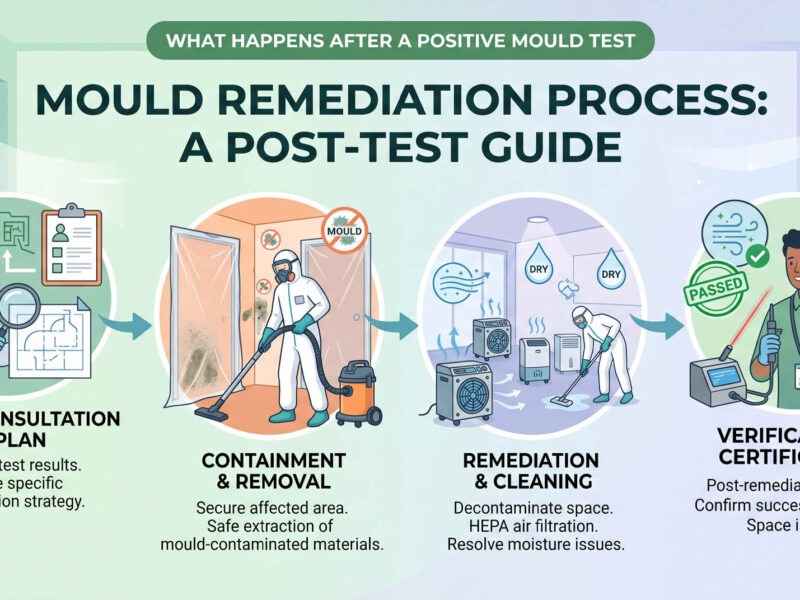
What Happens After Testing: Removal & Remediation
A positive mould test isn’t the end of the process – it’s the start of a remediation scope. We don’t carry out physical mould removal ourselves, but our reports are written to IICRC S500/S520 standards specifically so your remediation contractor has a clear, actionable scope of works – and we offer post-remediation verification testing to confirm the job’s actually done.
→ What happens after a positive mould test: removal, remediation & verification
Choosing a Mould Inspector in Brisbane
Not all “mould inspectors” hold the same qualifications. Look for a provider using occupational hygienists (not just a moisture meter and a template report), independent testing (no conflict of interest with a remediation arm pushing unnecessary work), and reporting aligned to industry standards.
→ How to choose a qualified mould inspector or hygienist in Brisbane
How Much Does Mould Testing Cost in Brisbane?
Costs vary depending on property size, number of areas tested, and whether air sampling is required alongside surface testing. As a guide, [link through to the cost breakdown in the inspection process post] for indicative pricing – or contact us for a free, no-obligation quote based on your specific property.
Book Your Mould Inspection or Testing in Brisbane
iOHC’s occupational hygienists provide independent, IICRC-aligned mould testing and inspection across Brisbane, Gold Coast, Sunshine Coast, Toowoomba, and Northern NSW. Contact us for a free quote or book an appointment online
Disclaimer – The information in this blog is for informational purposes only and is not intended as medical/financial/legal advice. Always consult with a professional before making any decisions based on this information. No guarantees or warranties are expressed by IOHC about the accuracy of the information contained in the blogs.