Table of Contents
Important Definitions for Understanding Mould Reports
Understanding mould reports requires familiarity with several key definitions and concepts. This section provides clear explanations of the different conditions of mould growth, as well as the term “environmental mould growth”, to assist readers in interpreting assessment and restoration documents.
Condition 1 Mould Growth
Condition 1 mould growth, as defined by the IICRC S520 standard, refers to a “normal fungal ecology” in an indoor environment. This means there are settled spores, fragments, or minor traces of mould present, which are typical for a clean and dry space. There is no extensive or active mould growth that would require major remediation. The objective of mould remediation is often to restore an area to this Condition 1 state, representing a healthy, pre-loss condition.
Condition 2 Mould Growth
Condition 2 mould growth, according to IICRC standards, describes an indoor environment contaminated by settled spores and fragments that have been dispersed from an active mould source (Condition 3). This situation indicates cross - contamination, where mould spores have landed but are not necessarily actively growing. Condition 2 points to a more significant issue than normal background mould, requiring specialised cleaning methods such as HEPA vacuuming, containment procedures, and careful removal of contaminated materials to prevent further spread and health risks.
Condition 3 Mould Growth
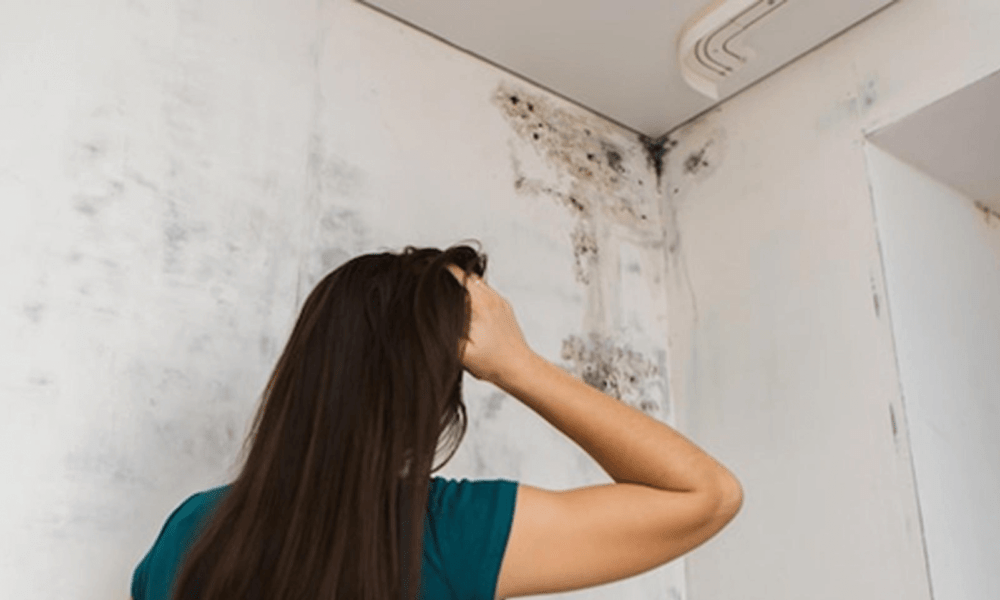
Condition 3 mould growth, as per IICRC standards, is characterised by actual, visible (or hidden) mould growth on surfaces and contents. This type of contamination is extensive and poses health risks due to large-scale spore dispersal. Condition 3 indicates the presence of active or dormant fungal colonies and requires professional remediation.
Environmental Mould Growth
The term “environmental mould growth” is often used by assessors and restorers to describe mould that develops as a result of high environmental humidity and inadequate ventilation or dehumidification. This definition is appropriate when there are no water ingress issues or leaks within the property. Mould growth in these instances appears on building structures or contents and is attributed purely to unfavourable environmental conditions.
It is important to note that the term “environmental mould growth” is sometimes incorrectly applied within the restoration industry. Some professionals may mislabel Condition 2 mould growth as environmental growth. If there is active mould growth in the property, or if water ingress has caused or contributed to mould growth, the correct classification should be Condition 2, not environmental growth.
Fungal Hyphae
Fungal hyphae are the long, branching, thread-like filaments that form the main body (mycelium) of most fungi, acting as their primary means of growth and nutrient absorption by releasing digestive enzymes and taking in pre-digested food. These microscopic structures, composed of cells with chitin cell walls, grow by extending their tips, allowing fungi to explore their environment and break down organic matter, making them crucial for decomposition and nutrient cycling.
Containment
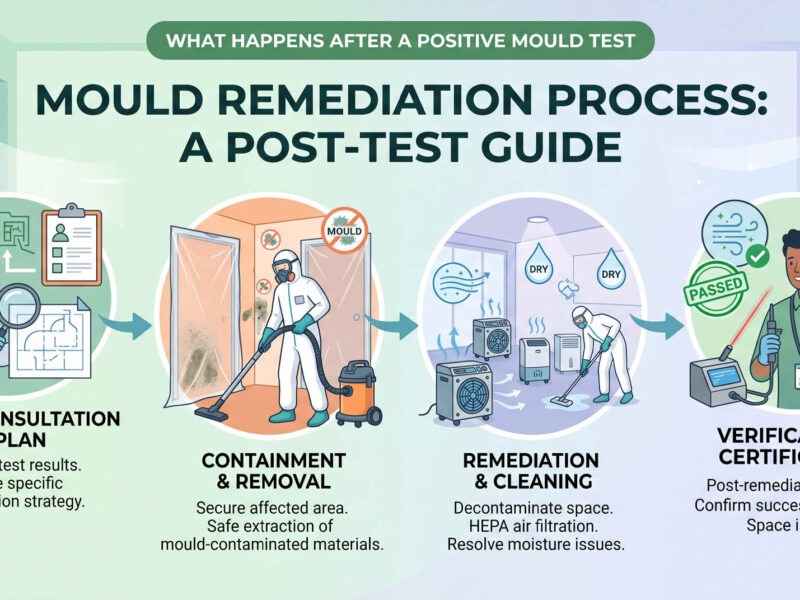
Containment in mould remediation is the critical process of isolating the contaminated area to stop microscopic mould spores from spreading to clean parts of a building during removal, using barriers and negative air pressure with HEPA filters to protect occupants, preserve materials, and maintain indoor air quality. It involves sealing off HVAC vents, setting up plastic sheeting, and using specialised equipment to create a sealed work zone, making the remediation safer and more effective.
Dew Point Temperature
The dew point temperature is the temperature to which air must be cooled, at constant pressure and moisture content, to become saturated with water vapour. At this temperature, the air has a relative humidity of 100%, and any further cooling causes excess water vapour to condense into liquid water (dew, fog, or clouds) or frost (if below freezing).
Relative Humidity
Relative humidity (RH) is the amount of water vapor in the air, expressed as a percentage of the maximum amount the air could hold at that specific temperature, meaning it's a measure of air's moisture saturation, where 100% RH is fully saturated, and warmer air can hold more moisture than cooler air, so RH drops as temperature rises with the same moisture content.
Air Scrubber/ Air Cleaner
An air scrubber/ air cleaner is a powerful, portable filtration device that cleans indoor air by drawing in dirty air, passing it through multi-stage filters (like HEPA and carbon) to trap dust, mould spores, allergens, chemicals, and odours, then releasing cleaner air back into the environment, often used in construction, restoration, and industrial settings for air decontamination and quality improvement.
Dehumidifier
A dehumidifier is an electrical appliance that removes excess moisture (water vapour) from the air in an enclosed space, reducing humidity to improve comfort, health, and protect belongings by preventing mould, mildew, and musty odours, often by cooling moist air over coils to condense water into a collection tank or drain. It works by drawing in humid air, cooling it to condense moisture, and then releasing the now drier air back into the room, making indoor environments less sticky and damp. It is important to understand that they only work effectively in enclosed spaces, so all windows and doors should be kept closed for them to work effectively.
Do you have Questions?
Call our office, our qualified hygienists are here to help.
Disclaimer – The information in this blog is for informational purposes only and is not intended as medical/financial/legal advice. Always consult with a professional before making any decisions based on this information. No guarantees or warranties are expressed by IOHC about the accuracy of the information contained in the blogs.