Queensland’s warm, humid climate makes it one of the easiest cities in Australia for mould to take hold. Between subtropical summers, poorly ventilated bathrooms, and homes built close to the coast, mould growth is less a question of “if” and more a question of “when” for many property owners. If you’ve spotted dark spotting on a ceiling, smelled a musty odour in a spare room, or simply want peace of mind before buying a property, a professional mould inspection in Brisbane is the right next step.
This guide walks through exactly what happens during a mould inspection, how it differs from mould testing, what the inspection actually checks, and what you can expect to pay. By the end, you’ll know what to ask for when you book an inspection and what a proper report should include.
What Is a Mould Inspection?
A mould inspection is a structured visual and instrumented assessment of a property carried out by a qualified hygienist or indoor environmental professional. The goal is to identify visible mould growth, locate the moisture source feeding it, and assess how far the contamination has spread – including into areas you can’t see, such as wall cavities, subfloors, and roof spaces.
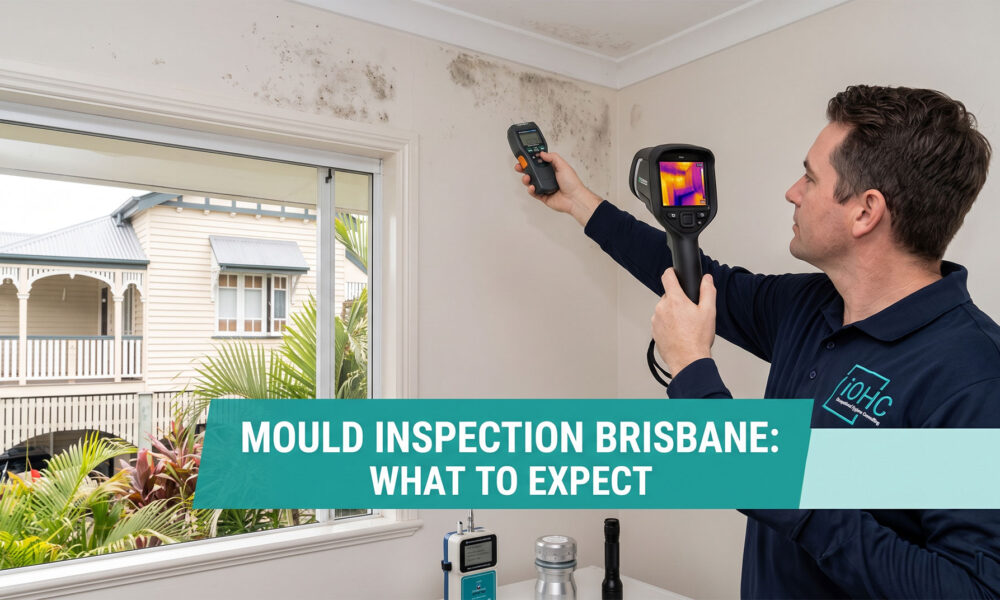
A proper inspection is not just someone walking through your home with a torch. It typically combines:
- A visual assessment of all accessible areas
- Moisture mapping using a moisture meter
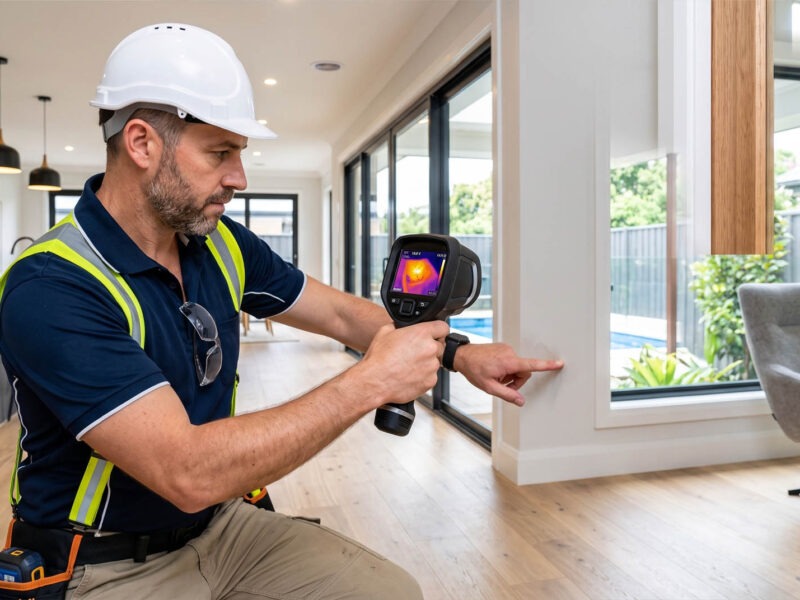
- Thermal imaging, in some cases, to detect hidden damp behind walls and ceilings
- A judgment on whether air or surface sampling is needed to confirm the extent of contamination
Inspections are commonly requested for three reasons: a known or suspected mould problem, a pre-purchase property check, or verification that previous remediation work was successful.
Mould Inspection vs Mould Testing: What's the Difference?
These two terms get used interchangeably, but they describe different stages of the same process.
Mould inspection is the visual and physical assessment – looking for growth, identifying moisture sources, and checking problem areas like bathrooms, window frames, roof voids, and subfloors. It answers the question: is there a mould problem, and where is it coming from?
Mould testing (also called sampling) involves taking physical samples – either from the air or directly off a surface – and sending them to a NATA-accredited laboratory for analysis. It answers a more specific question: what type and concentration of mould is present, and how does that compare to a normal background level?
Not every inspection needs testing. If mould is clearly visible and the moisture source is obvious, a hygienist may be able to advise on remediation without lab analysis. Testing becomes important when:
- The mould isn’t visible, but there’s a musty smell or reported health symptoms
- You need documented evidence for a property dispute, insurance claim, or tenancy issue
- Remediation work has been completed, and you need a clearance certificate confirming the property is safe to reoccupy
How Mould Is Classified: Understanding Conditions 1, 2, and 3
Australian and international mould assessment practice generally follows the IICRC S520 framework, which classifies indoor environments into three conditions based on contamination level rather than the size of visible growth alone.
Condition 1 (normal fungal ecology) describes a property with only the background level of spores and fungal fragments you’d expect in any indoor environment. There’s no indication of an active problem.
Condition 2 (settled spores) applies when spores have settled onto surfaces, having been dispersed from a Condition 3 area nearby, but there’s little or no active growth in that specific location.
Condition 3 (actual growth) is the most serious classification – it means there is visible, active mould growth present on a surface or material.
Understanding which condition applies to your property matters because it determines the scope of remediation required. A hygienist’s report should state the condition classification clearly, rather than relying on vague language like “a bit of mould” or “minor staining.”
What Happens During a Professional Mould Inspection
A thorough inspection at IOHC generally follows this sequence:
1. Initial consultation
Before attending the site, we ask about the history of the issue – when it was first noticed, whether there’s been recent water damage, flooding, or renovation work, and whether anyone in the property has reported symptoms such as respiratory irritation or allergic reactions.
2. Visual inspection
Every accessible area is checked, with particular attention to bathrooms, kitchens, window reveals, external walls, roof voids, and subfloors – the areas where moisture most commonly accumulates in Brisbane homes.
3. Moisture mapping
A moisture meter is used to identify damp materials that may not show visible mould yet, but indicate conditions where it’s likely to develop if left unattended. This step often reveals the underlying cause, whether it’s a leaking pipe, rising damp, poor ventilation, or condensation from inadequate airflow.
4. Sampling, if required
Where mould isn’t clearly visible but is suspected, or where a documented result is needed, air samples and/or surface (tape or swab) samples are collected and sent to a NATA-accredited laboratory.
5. Reporting
You receive a written report detailing the areas inspected, moisture readings, the mould condition classification, laboratory results (if sampling was carried out), the likely cause, and recommendations for remediation.
What's Included in a Quality Mould Inspection Report
A report worth paying for should include:
- A clear statement of the condition classification (1, 2, or 3) for each affected area
- Photographs documenting visible growth and moisture damage
- Moisture meter readings by location
- Laboratory results, where sampling was conducted, including species identification and spore counts
- A plain-English explanation of the likely cause
- Practical recommendations – whether that’s a DIY clean for minor surface mould, professional remediation for larger areas, or further investigation into a structural moisture issue
Avoid reports that simply say “mould was found, remediation recommended” without explaining condition, cause, or extent. That kind of report doesn’t give you, your insurer, or your real estate agent enough information to act on.
What Does a Mould Inspection Cost in Brisbane?
Pricing varies depending on property size, the number of areas affected, and whether laboratory sampling is required. As a general guide:
- A basic visual inspection of a single affected area in a standard residential property is the most affordable option, suited to situations where mould is visible and the cause is fairly obvious.
- A full property inspection covering all rooms, roof void, and subfloor, with moisture mapping throughout, sits in the mid-range and is typical for pre-purchase inspections or whole-of-property assessments.
- Adding air and surface sampling with NATA-accredited laboratory analysis increases the cost, but it is often necessary for insurance claims, tenancy disputes, or post-remediation clearance certificates.
Because pricing depends on your specific property and situation, the most accurate way to get a cost is to describe your circumstances when you enquire – property size, number of affected areas, and whether you need a clearance certificate or just an initial assessment.
When Should You Book a Mould Inspection?
Common triggers for booking an inspection include:
- Visible spotting or staining on walls, ceilings, or window frames
- A persistent musty odour, particularly after rain or in poorly ventilated rooms
- Recent water damage, a burst pipe, or flooding
- Unexplained respiratory symptoms, allergies, or worsening asthma in occupants
- Buying or selling a property, particularly older homes or properties that have been vacant
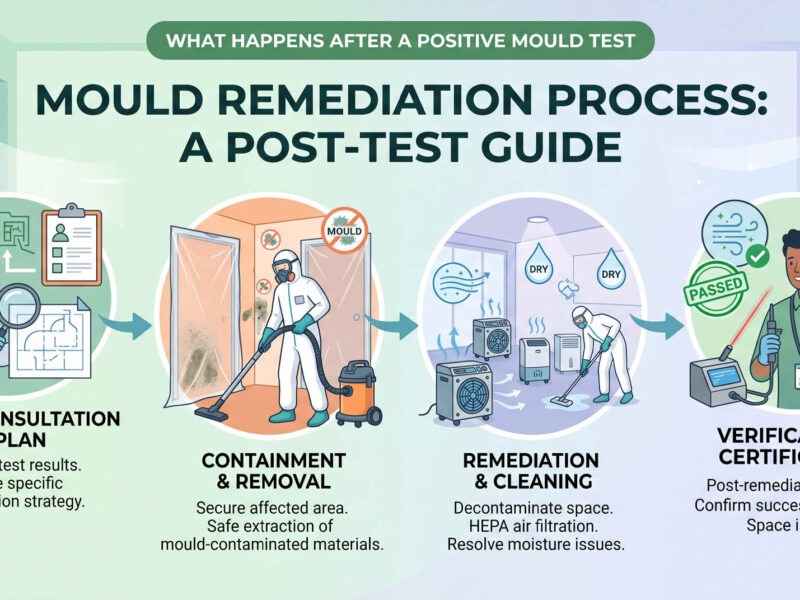
- Verifying that the remediation work carried out by a restoration company has actually resolved the problem
If you’re a landlord or property manager, a mould inspection also provides documented evidence of the property’s condition, which can be valuable in tenancy disputes about responsibility for mould growth.
Why Use an Independent Occupational Hygienist Instead of a Remediation Company?
There’s an inherent conflict of interest when the company that inspects your property for mould is the same company that profits from remediating it. An independent occupational hygienist has no financial stake in whether remediation is recommended – the report reflects what’s actually found, not what generates the most billable work afterwards.
At IOHC, our hygienists are qualified, experienced, and independent. We inspect, sample, and report – and if remediation is needed, you’re free to engage whichever contractor you choose, then bring us back for post-remediation verification to confirm the job was done properly.
Frequently Asked Questions
Most residential inspections take between 1 and 2 hours, depending on property size and the number of affected areas. If laboratory sampling is required, results typically take several business days to come back.
No. Inspections are non-invasive and don’t require you to vacate the property, though we may ask you to temporarily relocate pets while we access certain areas like roof voids or subfloors.
Yes. Pre-purchase mould inspections are common in Brisbane, particularly for older homes, properties that have been vacant, or homes in flood-affected areas. It’s best to arrange this during your standard building and pest inspection period.
No. If mould is clearly visible and the cause is obvious, a visual inspection with moisture mapping may be sufficient. Testing is recommended when mould isn’t visible but is suspected, when documented results are needed for insurance or legal purposes, or when verifying remediation success.
A clearance certificate is issued after remediation work to confirm the property has returned to a normal fungal ecology (Condition 1) and is safe to reoccupy. It’s commonly required for insurance claims and is good practice after any significant remediation project.
If the underlying moisture source isn’t fixed, mould can return within weeks. This is why identifying and addressing the cause – not just removing visible growth – is the most important part of any inspection and remediation process.
Book a Mould Inspection with IOHC
IOHC provides independent mould inspection and testing services across Brisbane and South East Queensland. Our hygienists carry out visual inspections, moisture mapping, air and surface sampling, and post-remediation clearance testing, with all samples analysed by a NATA-accredited laboratory.
Contact IOHC today to discuss or learn more about our Indoor Air Quality & Mould services.
Disclaimer – The information in this blog is for informational purposes only and is not intended as medical/financial/legal advice. Always consult with a professional before making any decisions based on this information. No guarantees or warranties are expressed by IOHC about the accuracy of the information contained in the blogs.