Respiratory protection is an important component of workplace health and safety in industries where airborne contaminants are present. However, simply providing respirators is not enough. Employers must ensure workers are wearing respirators that fit correctly and provide effective protection.
In Australia, respirator fit testing is guided by recognised standards and workplace safety obligations designed to reduce the risks associated with airborne hazards such as silica dust, asbestos fibres, fumes, vapours, and biological contaminants.
Understanding Australian standards for mask fit testing helps businesses improve worker safety, strengthen respiratory protection programs, and support compliance requirements.
What is Mask Fit Testing?
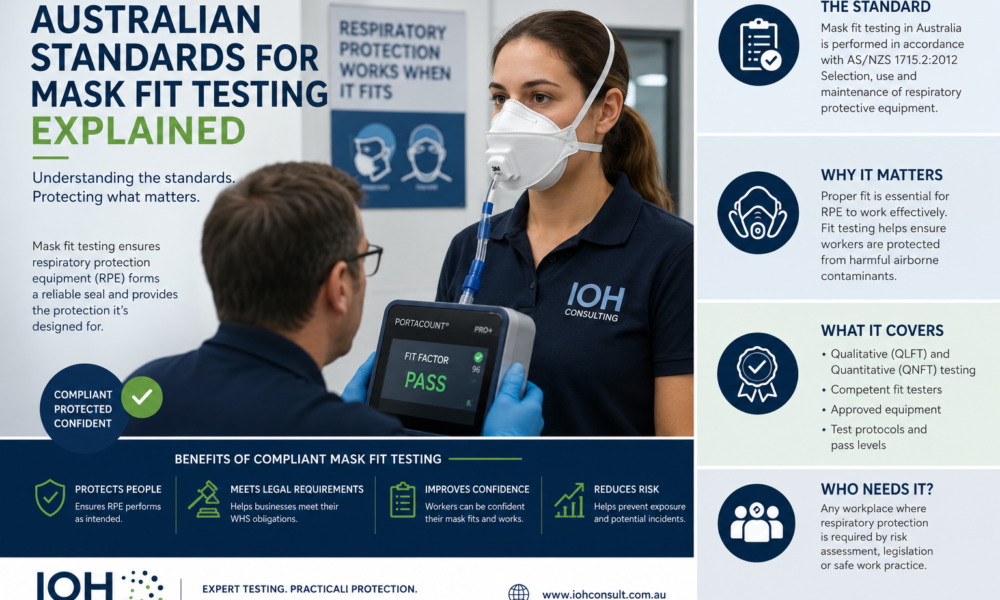
Mask fit testing is a process used to assess whether a respirator forms an effective seal against the wearer’s face.
A respirator that does not fit properly may allow contaminated air to bypass the filter and enter the breathing zone. This can significantly reduce the level of protection provided.
Fit testing confirms:
- The respirator is suitable for the worker
- A proper face seal is achieved
- Air leakage is minimised
- Workers receive appropriate respiratory protection
Fit testing is particularly important for tight-fitting respirators, such as:
- P2 respirators
- Disposable masks
- Half-face respirators
- Full-face respirators
The Australian Standard for Respirator Fit Testing
The primary Australian standard relating to respiratory protection is: AS/NZS 1715:2009
Selection, Use and Maintenance of Respiratory Protective Equipment
This standard provides guidance on:
- Respirator selection
- Proper usage
- Maintenance procedures
- Respiratory protection programs
- Fit testing requirements
The standard recommends that fit testing be conducted to ensure that tight-fitting respirators provide an adequate seal for each worker.
Why Fit Testing is Important Under Australian Standards
The purpose of fit testing is to confirm that respiratory protective equipment functions effectively in real workplace conditions.
Even high-quality respirators may fail if:
- The respirator size is incorrect
- The wearer has facial hair
- The respirator is poorly adjusted
- The respirator design does not suit the worker’s facial structure
Australian standards recognise that each worker’s facial shape is different, meaning one respirator model may not fit everyone properly.
Employer Responsibilities
Under Australian workplace health and safety obligations, employers are responsible for managing workplace risks, including airborne contaminants.
This includes:
- Identifying respiratory hazards
- Providing suitable respiratory protection
- Ensuring respirators fit correctly
- Maintaining respiratory equipment
- Providing worker training
Fit testing forms part of a broader respiratory protection program aimed at reducing exposure risks.
When Should Mask Fit Testing Be Conducted?
According to Australian guidance, fit testing should occur:
Before First Use
Workers should be tested before using a respirator in hazardous environments.
At Least Annually
Annual testing helps ensure continued protection.
When Respirator Models Change
Different respirator brands and models may fit differently.
After Facial Changes
Changes such as:
- Significant weight fluctuations
- Dental work
- Facial surgery
- Scarring
may affect respirator fit.
If Leakage is Suspected
Workers reporting poor fit or discomfort may require retesting.
Types of Fit Testing Recognised in Australia
Australian standards recognise two primary fit testing methods.
Qualitative Fit Testing
Qualitative testing relies on the wearer detecting a test substance through taste or smell.
Common test agents include:
- Sweet solution
- Bitter solution
The wearer performs movements and breathing exercises while wearing the respirator. If the test substance is detected, the respirator fit may be inadequate.
Suitable For
- Disposable respirators
- Half-face respirators
- Lower-risk environments
Quantitative Fit Testing
Quantitative testing uses specialised instruments to measure particle leakage into the respirator.
This method provides:
- Numerical fit factors
- Objective measurements
- Greater testing accuracy
Quantitative testing is often preferred for:
- Higher-risk workplaces
- Full-face respirators
- Detailed compliance documentation
Common Factors That Affect Respirator Fit
Several factors may impact the effectiveness of respiratory protection.
Facial Hair
Beards and stubble commonly interfere with respirator seals.
Incorrect Respirator Size
One-size-fits-all respirators may not provide adequate protection.
Improper Wearing Technique
Incorrect strap placement can compromise fit.
Damaged Respirators
Worn or damaged respirators may fail to seal effectively.
Facial Structure Differences
Different workers may require different respirator models.
Professional fit testing helps identify these issues early.
Industries Commonly Requiring Fit Testing
Respirator fit testing is commonly used across industries, including:
- Construction
- Mining
- Healthcare
- Manufacturing
- Asbestos removal
- Demolition
- Occupational hygiene
- Spray painting and coating
These industries often involve airborne hazards requiring effective respiratory protection.
Benefits of Following Australian Fit Testing Standards
Businesses that implement proper fit testing programs may benefit from:
- Improved worker protection
- Reduced respiratory exposure risks
- Better safety practices
- Stronger compliance procedures
- Increased worker confidence
- Enhanced workplace safety culture
Fit testing also helps employers demonstrate proactive risk management.
Building an Effective Respiratory Protection Program
Fit testing should form part of a comprehensive respiratory protection strategy that includes:
- Hazard assessments
- Appropriate respirator selection
- Worker training
- Equipment maintenance
- Regular inspections
- Ongoing monitoring
A structured program helps improve long-term respiratory safety outcomes.
Professional Mask Fit Testing Services in Brisbane
Professional respirator fit testing providers can assist businesses with:
- Quantitative fit testing
- Qualitative fit testing
- On-site testing services
- Respirator selection guidance
- Compliance support
- Record keeping and reporting
Working with experienced occupational hygiene professionals helps ensure respirator fit testing is conducted accurately and effectively.
As respiratory safety requirements continue to receive greater attention across Australian workplaces, professional mask fit testing remains an important step in protecting workers from airborne hazards and maintaining safer work environments.
Disclaimer – The information in this blog is for informational purposes only and is not intended as medical/financial/legal advice. Always consult with a professional before making any decisions based on this information. No guarantees or warranties are expressed by IOHC about the accuracy of the information contained in the blogs.