“Occupational hygienist” isn’t a job title most people encounter until their workplace needs one – and by then, it’s usually because a hazard has been identified, a regulator has asked questions, or a worker has raised a concern. Understanding what an occupational hygienist actually does, and when your business should engage one, helps you act before a hazard becomes an incident.
This guide explains the role of an occupational hygienist, the qualifications that matter, the situations that typically call for one, and how to choose a qualified consultant in Brisbane.
What Is an Occupational Hygienist?
An occupational hygienist is a specialist trained to anticipate, recognise, evaluate, and control workplace hazards that can affect worker health – distinct from safety hazards that cause immediate injury. Occupational hygiene focuses on the hazards that cause illness and disease over time, or sometimes immediately, through exposure to harmful agents in the air, on surfaces, or in the broader work environment.
These hazards generally fall into four categories:
- Chemical – dust, fumes, vapours, gases, and solvents, including substances like respirable crystalline silica and welding fumes
- Physical – noise, vibration, heat, radiation, and similar exposures
- Biological – mould, bacteria, and other organic contaminants
- Ergonomic – factors related to how work is physically performed, though this is sometimes treated as a related but separate discipline
An occupational hygienist’s job is to work out which of these hazards are present in a given workplace, how much workers are actually being exposed to, and what needs to change to bring that exposure to a safe level.
What Does an Occupational Hygienist Actually Do?
In practice, the work is highly varied, but commonly includes:
- Walk-through surveys to identify potential hazards in a workplace
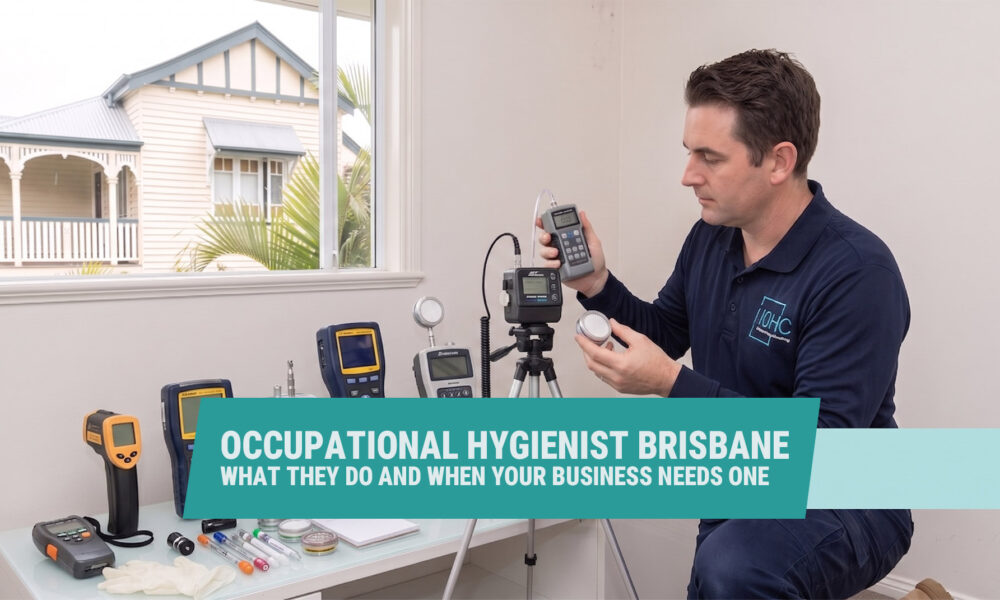
- Personal and area air monitoring – measuring a worker’s actual exposure to dust, silica, fumes, or other airborne contaminants over a work shift
- Noise surveys and audiometric testing programs
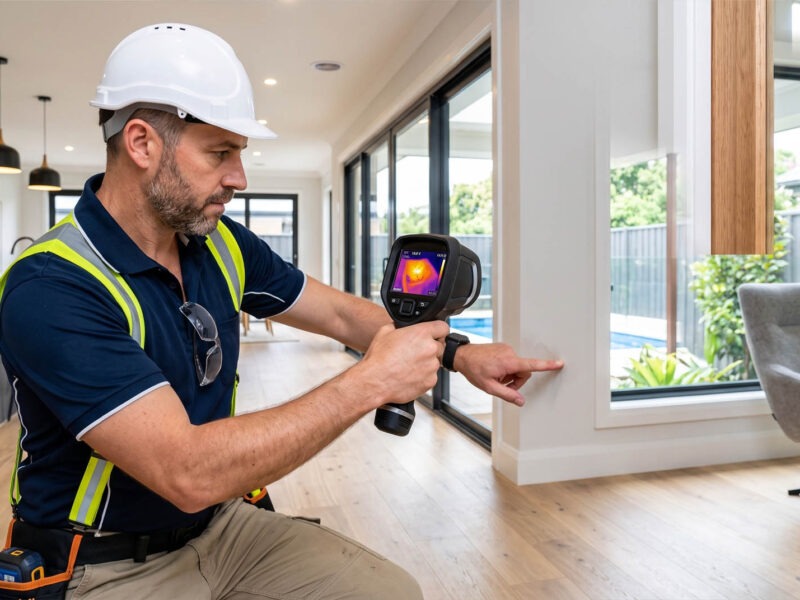
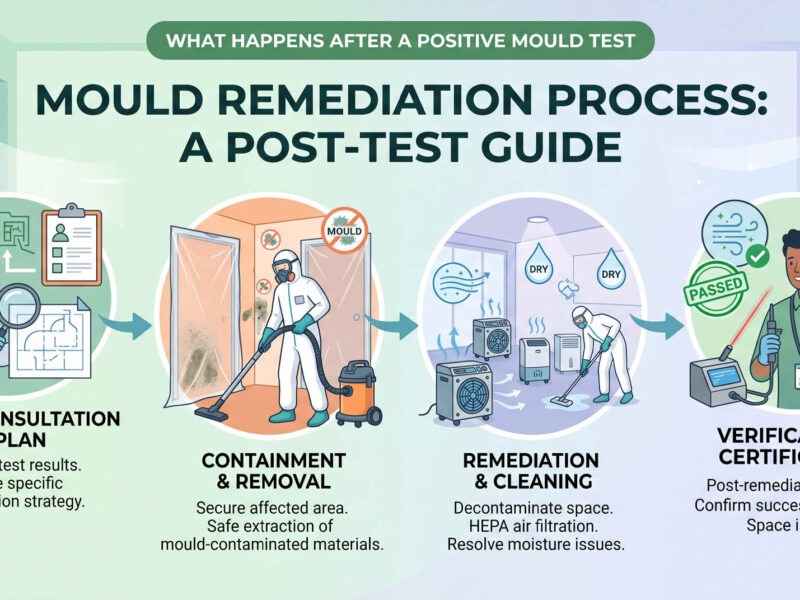
- Indoor air quality and mould assessments
- Respirator fit testing and respiratory protection program design
- Asbestos and hazardous materials inspections and air monitoring
- Risk assessments and recommendations for control measures, ranging from engineering controls to PPE
- Training for workers and management on hazard awareness and exposure control
The outcome of this work is typically a written report with measured data, an assessment against relevant exposure standards, and clear, practical recommendations – not just a list of problems, but a path to resolving them.
What Qualifications Should an Occupational Hygienist Have?
In Australia, the peak professional body for the discipline is the Australian Institute of Occupational Hygienists (AIOH). Full membership generally requires a science or engineering degree with appropriate quantitative subjects and occupational hygiene studies, plus more than five years of professional experience in the field.
The highest level of recognition is the Certified Occupational Hygienist (COH) credential, which requires full AIOH membership, demonstrated professional competence, and successful completion of an oral examination assessing technical knowledge, communication skills, and understanding of Australian WHS legislation. COHs are required to maintain ongoing professional development to retain their certification.
When engaging a hygienist or consultancy, it’s reasonable to ask about their qualifications and AIOH membership status, or to check the AIOH’s public register directly.
When Does Your Business Need an Occupational Hygienist?
Common triggers for engaging an occupational hygienist include:
- Workers are exposed to dust, silica, welding fumes, solvents, or other airborne chemical hazards
- Noise levels in the workplace may exceed safe exposure standards
- A new WHS regulation or code of practice applies to your industry – such as the silica Code of Practice affecting construction and stone benchtop industries
- Workers have reported symptoms, or there’s been an incident or near-miss related to a health hazard
- You’re introducing new processes, materials, or equipment that could change the hazard profile of the workplace
- A regulator, insurer, or client requires documented evidence of exposure monitoring or risk assessment
- You need a respiratory protection program designed and implemented, including respirator fit testing
- There’s a suspected indoor air quality or mould issue affecting staff in an office, healthcare facility, or other indoor workplace
It’s worth noting that engaging a hygienist proactively, before an incident or complaint, is generally far less costly and disruptive than responding after the fact – both in terms of remediation and any regulatory exposure.
Occupational Hygienist vs WHS Consultant: What's the Difference?
These roles are sometimes confused, but they serve different functions. A general WHS consultant typically advises on broader safety systems – policies, procedures, incident management, and overall compliance frameworks. An occupational hygienist specialises specifically in measuring and controlling health hazards: airborne contaminants, noise, chemical exposures, and similar issues that require technical measurement and quantitative assessment against exposure standards.
Many workplaces need both. A WHS consultant might manage your overall safety system, while an occupational hygienist is brought in specifically to monitor and assess a hazard like silica dust or noise exposure that requires specialist equipment and technical interpretation.
How to Choose an Occupational Hygiene Consultant in Brisbane
When comparing consultants, consider:
- Qualifications – ask about AIOH membership and, ideally, COH certification for senior consultants
- Independence – a consultant with no financial interest in remediation or product sales gives you an unbiased assessment
- Relevant industry experience – hazards and exposure scenarios vary significantly between construction, healthcare, manufacturing, and mining
- Laboratory accreditation – any samples collected should be analysed by a NATA-accredited laboratory
- Report quality – ask to see a sample report; it should include measured data, comparison to exposure standards, and clear recommendations, not just a pass/fail statement
- Responsiveness – particularly important if you’re dealing with an active hazard, incident, or regulatory deadline
Frequently Asked Questions
An occupational hygienist identifies, evaluates, and recommends controls for chemical, physical, biological, and ergonomic hazards in the workplace that could affect worker health.
Most hygienists hold a science or engineering degree with occupational hygiene studies. The Certified Occupational Hygienist (COH) credential through AIOH requires tertiary qualifications plus five or more years of professional experience and passing an oral examination.
Common triggers include exposure to dust, silica, noise, chemicals, or biological hazards, a new WHS requirement, an incident or complaint, or as part of a routine workplace risk assessment program.
A WHS consultant typically advises on broad safety systems and compliance, while an occupational hygienist specialises in measuring and controlling specific health hazards like airborne contaminants, noise, and chemical exposures.
You can check the AIOH public register for Certified Occupational Hygienists, or ask the consultant directly about their qualifications, membership status, and relevant experience.
If the hazard requires technical measurement – such as quantifying airborne dust, silica, or noise exposure against a legal standard – you need an occupational hygienist. A safety officer typically manages broader compliance and day-to-day safety practices.
Work with an Independent Occupational Hygienist in Brisbane
IOHC is a boutique, independent occupational hygiene consultancy serving businesses across Brisbane and Queensland. Our team includes qualified occupational hygienists, indoor air quality specialists, and licensed asbestos assessors, providing tailored consulting rather than one-size-fits-all reports.
Contact IOHC today to discuss your workplace hazards or learn more about our Occupational Hygiene services.
Disclaimer – The information in this blog is for informational purposes only and is not intended as medical/financial/legal advice. Always consult with a professional before making any decisions based on this information. No guarantees or warranties are expressed by IOHC about the accuracy of the information contained in the blogs.