We spend most of our lives indoors – at home, at work, in classrooms and clinics – yet indoor air quality (IAQ) rarely gets a second thought until something goes wrong. A musty smell that won’t go away, staff reporting headaches in a particular part of the office, or a property that’s just been renovated are all situations where the air itself, not just what you can see, deserves a proper look.
This guide explains what indoor air quality testing actually involves, what it measures, when you need it, and how to interpret the results, so you know exactly what you’re paying for and what to expect.
What Is Indoor Air Quality Testing?
Indoor air quality testing is the process of measuring the physical, chemical, and biological characteristics of the air inside a building to determine whether it supports health and comfort or contains contaminants that could be causing harm. It’s carried out using a combination of direct-reading instruments and, where necessary, air sampling sent to a laboratory for analysis.
Unlike a quick walk-through assessment, proper IAQ testing produces measured data – actual numbers you can compare against recognised guidelines, rather than a subjective opinion about whether a space “feels” stuffy or fine.
What Does an IAQ Test Actually Measure?
The specific parameters tested depend on the suspected issue, but a comprehensive indoor air quality assessment typically covers:
- Particulate matter (PM2.5 and PM10) – fine dust and airborne particles that can penetrate deep into the lungs
- Volatile organic compounds (VOCs) – chemicals off-gassed from paints, adhesives, new furniture, cleaning products, and building materials
- Carbon dioxide (CO2) – used as an indicator of ventilation adequacy; elevated CO2 generally points to poor air exchange in occupied spaces
- Temperature and relative humidity – both affect comfort and, when humidity is high, create conditions favourable to mould growth
- Mould spores and bioaerosols – sampled where there’s a suspected biological contamination issue
- Specific contaminants – such as formaldehyde, combustion gases, or other substances relevant to a particular building history or industry
Not every test needs to cover every parameter. A hygienist will typically scope the assessment based on the building’s history, occupant complaints, and any visible or suspected issues before deciding what to measure.
Who Needs Indoor Air Quality Testing?
IAQ testing is relevant to a broad range of situations, including:
- Homeowners experiencing unexplained allergy symptoms, headaches, or respiratory irritation
- Workplaces where staff have raised concerns about air quality, ventilation, or odours
- Schools, childcare centres, and healthcare facilities, where occupant health is a particular priority
- Commercial property managers carrying out due diligence before a lease renewal or tenant fit-out
- Properties recently affected by fire, smoke, flood, or major renovation work
- New or recently renovated buildings, where off-gassing from materials can elevate VOC levels for weeks or months after completion
How Is an IAQ Assessment Carried Out?
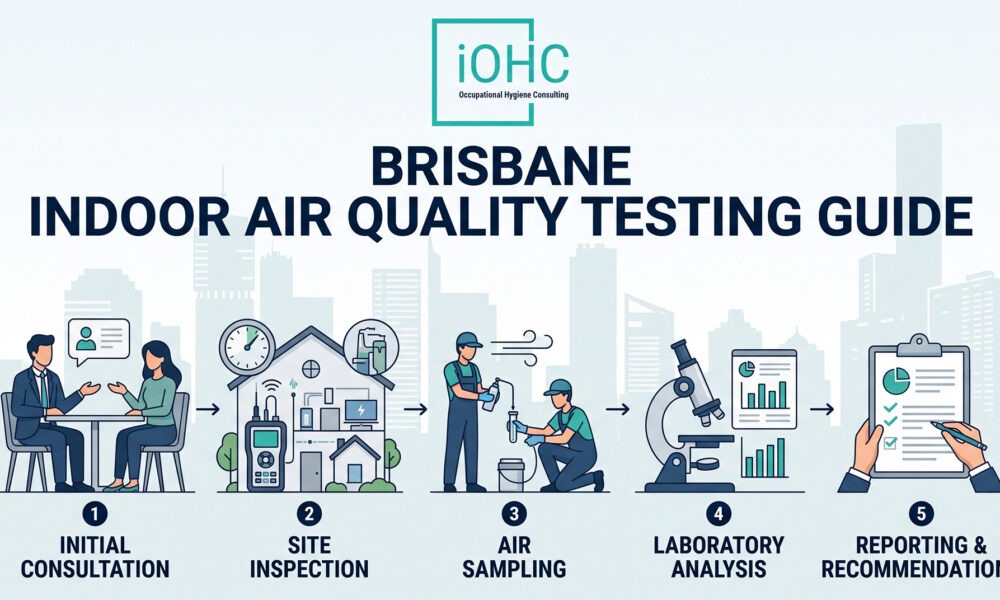
1. Scoping consultation
Before attending the site, we discuss the history of the building, any reported symptoms or complaints, recent renovations or water events, and what’s already been tried to resolve the issue.
2. On-site walkthrough
A visual inspection identifies obvious sources of contamination – visible mould, signs of water damage, inadequate ventilation, or recently installed materials that may be off-gassing.
3. Instrumented monitoring
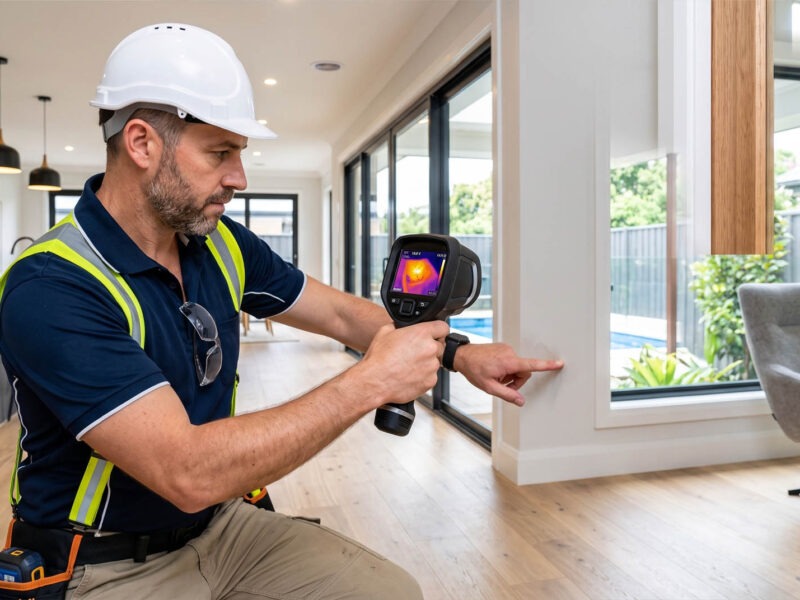
Direct-reading instruments measure particulates, VOCs, CO2, temperature, and humidity in real time across different areas of the building, allowing comparison between problem areas and unaffected reference areas.
4. Sampling, where required
If biological contamination or a specific chemical is suspected, air samples are collected and sent to a NATA-accredited laboratory for analysis.
5. Reporting
Results are compiled into a report that compares measured levels against relevant guidelines, identifies likely sources, and provides practical recommendations – whether that’s improved ventilation, source removal, or further investigation.
How to Interpret IAQ Test Results
A good IAQ report doesn’t just list numbers – it explains what they mean. Look for a report that:
- States the measured value for each parameter against an appropriate reference level or guideline
- Compares indoor readings to an outdoor or unaffected reference area, since some level of background contaminants is normal
- Identifies the likely source of any elevated readings, rather than just flagging that a number is high
- Gives clear, practical recommendations rather than vague statements like “ventilation could be improved”
If you receive a report that’s just a table of numbers with no interpretation, you haven’t really received the assessment – you’ve received raw data. The value of working with an occupational hygienist is in the interpretation and the recommendations that follow.
Indoor Air Quality Testing in the Workplace
For employers, indoor air quality has a direct connection to work health and safety obligations. Persons conducting a business or undertaking (PCBUs) are required to manage risks to worker health, and poor air quality – whether from chemical exposure, inadequate ventilation, or biological contamination – can constitute a hazard that needs to be assessed and controlled.
Common workplace triggers for IAQ testing include staff reporting symptoms clustered around a specific area, complaints following a renovation or new fit-out, persistent odours, or simply as part of a broader occupational hygiene risk assessment program.
Frequently Asked Questions
A typical IAQ test measures particulate matter, volatile organic compounds, carbon dioxide, temperature, and humidity, and may include sampling for mould spores or other specific contaminants depending on the suspected issue.
On-site testing typically takes one to a few hours, though some parameters, such as VOCs, may need longer sampling periods to capture an accurate picture.
Common triggers include unexplained symptoms in occupants, musty odours, recent renovation or fire damage, or as part of due diligence before signing a commercial lease.
For workplaces, WHS obligations require employers to manage risks from airborne hazards, which can necessitate testing depending on the industry and the hazard involved. Requirements vary by situation.
Cost depends on the size of the area being tested, the number of parameters measured, and whether laboratory analysis of samples is required.
Yes. Air sampling can detect elevated mould spore counts even when growth isn’t visible, which is useful when occupants report symptoms or odours but nothing is visibly wrong.
Book an Indoor Air Quality Assessment with IOHC
IOHC provides independent indoor air quality testing for homes, workplaces, schools, and commercial properties across Brisbane and South East Queensland. Our hygienists scope the right parameters for your situation and provide clear, actionable reporting – not just a table of numbers.
Contact IOHC today to discuss your indoor air quality concerns or learn more about our Indoor Air Quality & Mould services.
Disclaimer – The information in this blog is for informational purposes only and is not intended as medical/financial/legal advice. Always consult with a professional before making any decisions based on this information. No guarantees or warranties are expressed by IOHC about the accuracy of the information contained in the blogs.