Indoor Air Quality (IAQ) plays a crucial role in the health, comfort, and productivity of building occupants. Poor indoor air quality can contribute to a wide range of issues, including respiratory problems, allergies, headaches, fatigue, and long-term health risks. Whether in a home, office, school, or commercial facility, IAQ testing helps identify hidden pollutants and environmental conditions that may be affecting the indoor environment.
Many people know they have a problem – such as musty odours, visible mould, or unexplained health symptoms – but are unsure what actually happens during an IAQ test. This article provides a clear, step-by-step overview of the IAQ testing process, from the initial inspection through to monitoring, sampling, humidity assessment, and final reporting.
Step 1: Initial Inspection and Consultation
Every IAQ assessment begins with a thorough initial inspection and consultation. This stage is critical because it sets the foundation for the entire testing process.
Understanding the Building and Its History
The consultant will first gather background information about the property, including:
- The age and type of building
- Past water damage, leaks, or flooding
- Renovation or construction history
- Ventilation systems
- Occupant complaints or health concerns
This information is then used to determine which contaminants may be present in the environment and should be measured.
Visual Inspection
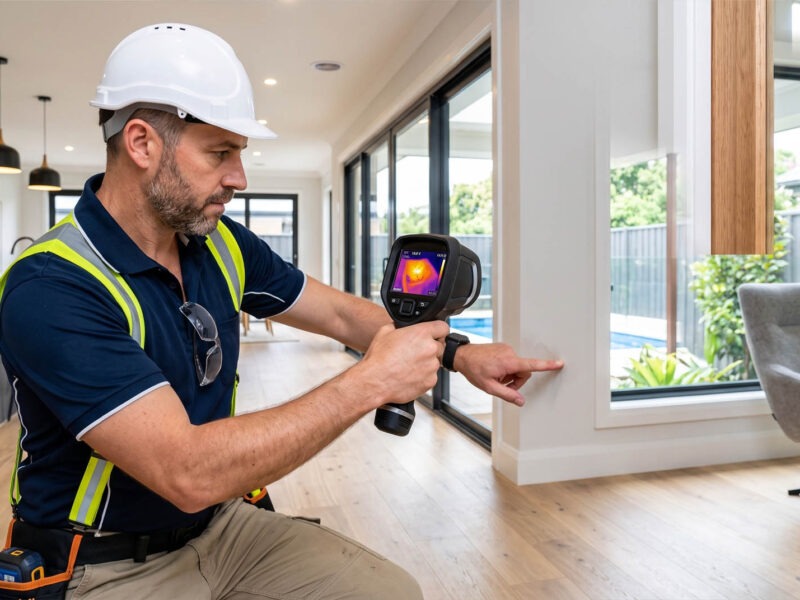
A detailed visual inspection follows, focusing on areas most prone to air quality issues. These may include:
- Bathrooms, kitchens, and laundries
- Basements, crawl spaces, and roof voids
- HVAC systems and air vents
- Walls, ceilings, carpets, and window frames
The assessor looks for odours in the area, visible mould growth, water stains, condensation, damaged building materials, or signs of excessive humidity.
This initial step helps determine what type of testing is required and ensures that sampling is targeted, accurate, and relevant.
Step 2: Air Monitoring and Sampling
Once the inspection is complete, the next phase involves air monitoring and sampling. This step provides measurable data about what is actually present in the indoor air.
Air Sampling
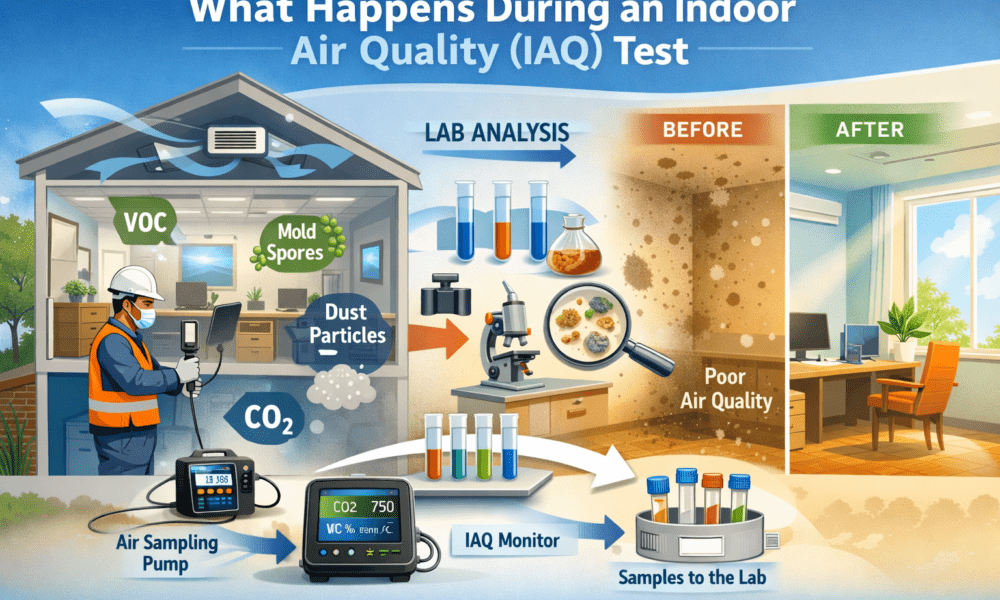
Air samples are collected using specialised equipment designed to capture airborne particles, gases, and chemicals, including:
- Mould spores
- Dust and particulates
- Chemicals and gases
- Other biological contaminants
Samples are typically taken from:
- Areas of concern identified during the inspection
- Occupied spaces where people spend the most time
- Outdoor air (used as a comparison reference)
Comparing indoor and outdoor samples helps determine whether contaminants are originating inside the building or entering from outside.
Continuous Air Monitoring
In some cases, continuous monitoring devices may be used to measure air quality over a period of time. These devices can track:
- Particulate levels
- Carbon dioxide (CO₂) concentrations
- Temperature fluctuations
- Volatile organic compounds (VOCs), where relevant
Continuous monitoring is especially useful in workplaces, schools, or buildings where conditions change throughout the day.
Why This Step Matters
Air monitoring and sampling provide objective evidence. Instead of relying on assumptions or visible signs alone, this step delivers scientific data that identifies potential risks and supports informed decision-making.
Step 3: Surface and Targeted Sampling (When Required)
Surface Sampling
Surface samples may be collected from:
- Walls or ceilings with suspected mould growth
- HVAC components
- Furniture, carpets, or building materials
These samples help confirm the presence and type of contaminants and assess whether they are actively growing or simply settled from the air.
Targeted Investigations
If the inspection reveals specific problem areas – such as a water-damaged wall or ceiling cavity – targeted sampling may be performed. This approach ensures that hidden issues are not overlooked.
Not every IAQ assessment requires surface sampling, but when used appropriately, it adds valuable detail to the overall evaluation.
Step 4: Humidity and Moisture Assessment
Humidity and moisture play a major role in indoor air quality, particularly when it comes to mould growth. As a result, humidity checks and moisture assessments are a key part of Mould and IAQ testing.
Measuring Humidity Levels
Specialised instruments are used to measure relative humidity throughout the building. Ideally, indoor humidity should remain within a healthy range. Elevated humidity can:
- Provide favourable conditions for mould growth
- Cause condensation on surfaces
- Make indoor environments feel uncomfortable and stuffy
Moisture Mapping
In areas where leaks or dampness are suspected, moisture meters are used to assess:
- Walls
- Floors
- Ceilings
- Building cavities
This process helps identify hidden moisture that may not yet show visible signs but could lead to air quality problems over time.
Identifying the Root Cause
Rather than focusing only on symptoms, humidity and moisture tests allow identifying the root causes of poor IAQ instead of the leak, insufficient ventilation, or structural problems.
Step 5: Laboratory Analysis
Once samples are collected, they are sent to accredited laboratories for analysis. This step ensures accurate identification and quantification of contaminants.
What the Lab Looks For
Laboratory analysis may identify:
- Types and concentrations of mould spores/ other airborne contaminants
- Presence of abnormal or elevated contaminant levels
- Differences between indoor and outdoor air samples
The lab results provide scientific validation and eliminate guesswork.
Step 6: Data Interpretation and Risk Assessment
Raw data alone is not enough. A qualified professional must interpret the findings and assess potential risks.
Interpreting Results
The consultant evaluates:
- Whether contaminant levels are elevated
- How indoor results compare to outdoor reference samples
- The likelihood that identified contaminants are affecting occupants
Health and Occupancy Considerations
Risk assessments may also consider:
- Sensitive occupants (children, elderly individuals, people with asthma or allergies)
- Building usage patterns
- Duration of exposure
This interpretation transforms test results into meaningful insights that guide next steps.
Step 7: Final Reporting and Recommendations
The final step in an IAQ and Mould test is the delivery of a comprehensive written report. This document is one of the most important outcomes of the assessment.
What the IAQ Report Includes
A professional IAQ report typically contains:
- An overview of the inspection process
- Details of sampling methods and locations
- Laboratory results and data summaries
- Interpretation of findings
- Identified risks or concerns
Practical Recommendations
Most importantly, the report provides clear, practical recommendations, which may include:
- Improving ventilation
- Addressing moisture sources
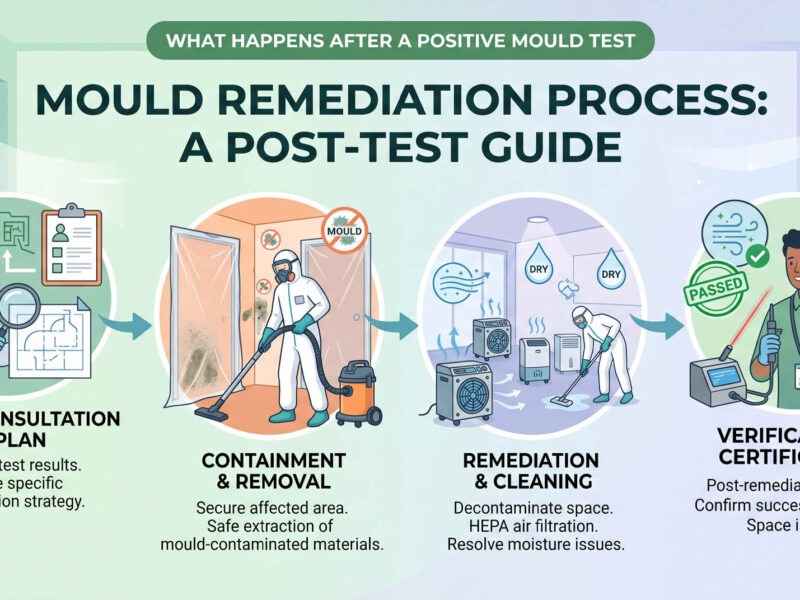
- Professional mould remediation
- Ongoing monitoring or follow-up testing
These recommendations are tailored to the specific building and its conditions, ensuring that solutions address root causes rather than temporary fixes.
Why a Professional IAQ Test Is Important
An IAQ and mould testing is not merely a collection of the air samples, it is a systematic, evidence-based procedure geared towards health preservation and better indoor spaces. IAQ testing offers clarity, confidence and solutions through a systematic method that involves inspection, monitoring, humidity measurement and reporting
Our assessments aim to provide clarity on the current conditions of the property and what actions are required to rectify the issues in the property. We work with house/building owners, property managers, restoration companies and building contractors to assist them in managing indoor air quality and mould problems in properties.
Do you have Questions?
Disclaimer – The information in this blog is for informational purposes only and is not intended as medical/financial/legal advice. Always consult with a professional before making any decisions based on this information. No guarantees or warranties are expressed by IOHC about the accuracy of the information contained in the blogs.