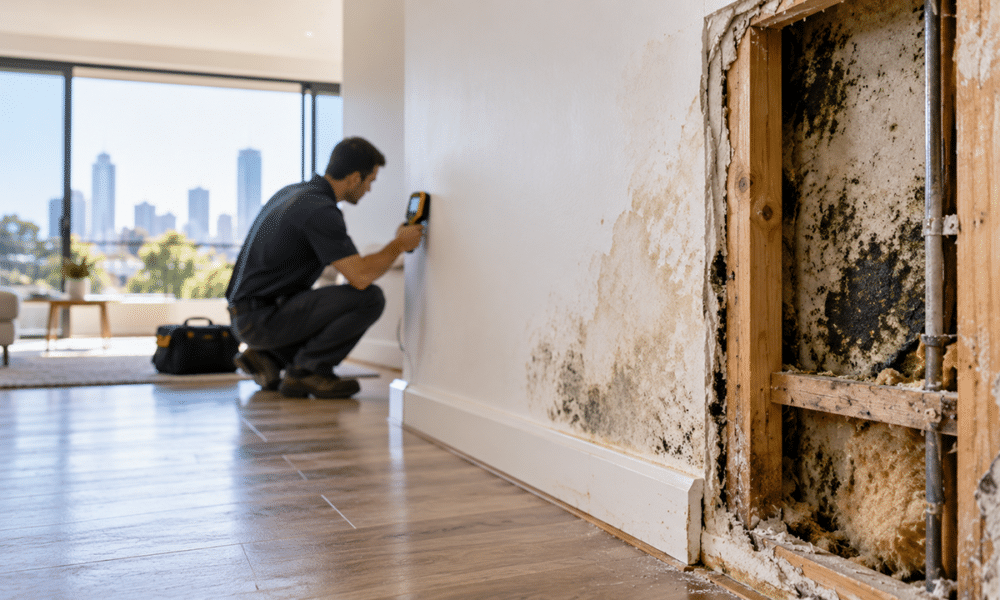
Mould is not always easy to see. While obvious mould growth on a ceiling, wall or bathroom surface may be relatively straightforward to identify, mould can also develop in concealed areas where it remains unnoticed for weeks, months or even longer.
For Brisbane property owners, this can be particularly concerning. Warm temperatures, periods of high humidity, rainfall, water leaks and condensation can all contribute to conditions that allow mould to develop. When moisture enters areas that are difficult to access, mould may grow behind walls, beneath flooring, inside roof cavities or around air-conditioning systems without being immediately visible.
This is why a professional mould inspection in Brisbane may involve more than simply looking for visible mould. A qualified occupational hygienist can investigate moisture sources, assess areas of concern and use specialised equipment and sampling methods where appropriate.
What Is Hidden Mould?
Hidden mould refers to fungal growth that develops in areas that are not readily visible or accessible.
It can occur when moisture becomes trapped behind or underneath building materials. For example, a leaking pipe inside a wall cavity may create a damp environment where mould can grow without producing obvious surface staining.
Similarly, a roof leak may allow moisture to accumulate in insulation or ceiling materials before visible mould appears.
Hidden mould can be difficult to identify because there may be no obvious visual evidence. Instead, property owners may notice indirect signs such as:
- Persistent musty or earthy odours
- Recurring condensation
- Water staining or discolouration
- Peeling paint or wallpaper
- Swollen or damaged building materials
- Unexplained damp areas
- Previous flooding or water leaks
- Mould that repeatedly returns after cleaning
- Indoor air quality concerns
A professional investigation can help determine whether these signs are associated with an underlying moisture or mould problem.
Where Can Hidden Mould Be Found?
Mould can develop in many parts of a property, particularly where moisture, limited ventilation and organic materials occur together.
1. Behind Walls and Wall Cavities
Wall cavities can provide an ideal concealed environment for mould when water enters through plumbing leaks, roof leaks, damaged external walls or building defects.
A small plumbing leak inside a wall may not be obvious from the room itself. Over time, however, moisture can accumulate and affect plasterboard, insulation, timber framing and other materials.
Signs may include:
- Musty smells near a wall
- Bubbling or peeling paint
- Discolouration
- Dampness
- Repeated mould growth on the same section of wall
Where hidden moisture is suspected, professionals may use moisture measurement and thermal imaging to investigate areas that cannot be assessed through visual inspection alone.
2. Under Flooring
Mould can also develop beneath carpets, timber flooring, vinyl, tiles or other floor coverings following water damage.
This can occur after:
- Flooding
- Plumbing failures
- Appliance leaks
- Stormwater intrusion
- Persistent condensation
- Previous water damage that was not completely dried
Flooring can conceal moisture for considerable periods, particularly where the underlying substrate has limited ventilation.
A professional assessment can help identify abnormal moisture levels and determine whether further investigation or sampling is warranted.
3. Roof Cavities and Insulation
Roof spaces are another area where hidden mould can develop.
Roof leaks, condensation, inadequate ventilation and plumbing or air-conditioning issues can introduce moisture into ceiling cavities.
Insulation can be particularly difficult to assess because it may conceal moisture damage or mould growth underneath or around it.
During an inspection, an occupational hygienist may examine accessible roof spaces for signs of:
- Water intrusion
- Damp insulation
- Mould growth
- Condensation
- Poor ventilation
- Roof or plumbing leaks
Identifying the moisture source is important because simply cleaning visible mould without addressing the underlying problem may allow the issue to return.
4. Behind Cabinets and Large Furniture
Mould can sometimes develop behind cupboards, wardrobes, bookcases and other large items positioned against walls.
Limited airflow can allow moisture to remain trapped, particularly on external walls or in rooms with elevated humidity.
Bathrooms, kitchens, bedrooms and storage areas may require particular attention where ventilation is inadequate.
In these situations, mould may remain hidden until furniture is moved or an odour becomes noticeable.
5. Around Windows and Door Frames
Condensation and water penetration around windows and doors can create localised moisture problems.
This is particularly relevant when condensation repeatedly forms on glass or surrounding surfaces.
Potential warning signs include:
- Black or dark spotting around frames
- Peeling paint
- Damp timber
- Swollen trim
- Musty odours
- Recurring mould after cleaning
A professional inspection can help distinguish between surface condensation and a more significant moisture intrusion problem.
6. Air-Conditioning Systems and HVAC Areas
Air-conditioning systems can also require investigation when mould or indoor air quality concerns arise.
Moisture can accumulate around components of HVAC systems, particularly where drainage, humidity control or maintenance is inadequate.
If mould contamination is suspected in an air-conditioning system, the investigation may need to consider:
- Condensation
- Drainage
- Filters
- Internal components
- Air-handling areas
- Adjacent building materials
IOHC provides indoor air quality and mould assessments that can consider HVAC issues and other conditions contributing to mould growth.
Why Can Hidden Mould Be Difficult to Detect?
The main challenge with hidden mould is that the affected area may not be directly visible.
A visual inspection can identify obvious mould growth, but it may not reveal what is happening behind a wall or underneath flooring.
This is where an investigation needs to consider the conditions that support mould growth, not simply the mould itself.
For example, an occupational hygienist may ask:
- Where is moisture entering the property?
- How long has the moisture been present?
- Which materials may have been affected?
- Is there adequate ventilation?
- Has the property previously experienced flooding or leaks?
- Are there unusual odours?
- Are occupants reporting concerns?
- Could mould be present outside the visibly affected area?
Answering these questions helps determine whether additional investigation is appropriate.
How Do Professionals Detect Hidden Mould?
A professional mould inspection in Brisbane may involve several assessment techniques depending on the property and suspected source.
Visual Inspection
The first step is usually a detailed visual assessment.
This can identify visible mould, water damage, staining, damaged materials and areas where moisture may be accumulating.
IOHC states that its mould inspection process includes visual inspection of walls, ceilings and other surfaces for visible mould or water damage.
Moisture Measurement
Moisture meters can help identify areas where building materials contain elevated moisture levels.
This can be particularly useful when mould is not yet visible but conditions suggest that moisture may be present.
Importantly, moisture assessment can help investigate the cause of the mould problem rather than simply identifying the growth itself.
Thermal Imaging
Thermal imaging can help identify temperature differences that may indicate areas requiring further investigation.
It can be useful when investigating suspected moisture behind surfaces, although thermal imaging does not directly identify mould.
Instead, it provides additional information that can help an occupational hygienist determine where further investigation may be appropriate.
IOHC specifically identifies moisture meters and thermal imaging as tools used to detect hidden moisture during mould inspections.
Air Sampling
Air sampling can be considered when mould is suspected but is not readily visible or when information about airborne mould spores is required.
Samples can provide information about airborne fungal spores and may be useful when investigating indoor air quality concerns.
However, air sampling should not be viewed as a replacement for investigating the moisture source.
Surface Sampling
Surface swabs or other sampling methods may be used where visible or suspected contamination needs further investigation.
IOHC’s mould assessment service includes surface swabs and air samples to help analyse mould spores and assess the type and extent of contamination.
The appropriate sampling approach depends on the reason for the investigation and the conditions identified during the inspection.
Why Finding the Moisture Source Matters
Finding mould is only part of the investigation.
If the underlying moisture problem remains unresolved, mould may return even after affected materials have been cleaned or removed.
Potential moisture sources include:
- Plumbing leaks
- Roof leaks
- Flooding
- Condensation
- Poor bathroom ventilation
- Inadequate building ventilation
- Water ingress
- Air-conditioning condensation
- Building defects
A professional investigation should therefore consider both where mould is present and why the conditions allowed it to develop.
When Should You Arrange a Mould Inspection in Brisbane?
A professional assessment may be appropriate when:
- You can smell persistent musty odours but cannot identify the source.
- Mould repeatedly returns after cleaning.
- The property has experienced flooding or significant water damage.
- There is unexplained staining or dampness.
- You suspect mould behind walls or beneath flooring.
- A roof or plumbing leak has affected building materials.
- Occupants have concerns about indoor air quality.
- You are responsible for a commercial or rental property with suspected mould.
- You need independent documentation for an insurance, legal or property-related matter.
The appropriate scope of an investigation depends on the circumstances. Not every situation requires extensive sampling, which is why an initial professional assessment can help determine the next appropriate step.
Professional Mould Inspection and Testing in Brisbane
When hidden mould is suspected, relying only on what can be seen may leave important parts of the problem undiscovered.
A professional investigation can combine visual assessment, moisture measurement, thermal imaging and targeted sampling where appropriate. This helps build a clearer picture of the property’s condition and the factors contributing to mould growth.
IOHC provides mould inspection and mould testing services in Brisbane and surrounding areas for residential, commercial and industrial properties. Its qualified occupational hygienists assess visible mould, moisture conditions, potential hidden contamination and contributing factors using established investigation methods.
The service can also support situations where mould and indoor air quality assessments are required for health risk assessment, legal or insurance purposes.
Need a Professional Mould Inspection in Brisbane?
If you suspect hidden mould, identifying the source early can help prevent the problem from becoming more extensive.
IOHC can assess your property and determine whether further mould testing or investigation is appropriate based on the conditions identified.
Learn more about IOHC’s Indoor Air Quality & Mould services or Contact IOHC to discuss your property and arrange an assessment.
Conclusion
Hidden mould can be challenging to identify because it may develop behind walls, beneath flooring, inside roof cavities, around windows, behind furniture or within areas associated with air-conditioning systems.
Musty odours, unexplained moisture, recurring mould and a history of water damage can all indicate that further investigation may be worthwhile.
A professional mould inspection in Brisbane can go beyond a basic visual check by investigating moisture conditions, identifying potential sources and using specialised tools and targeted sampling where appropriate.
The goal is not simply to find mould. It is to understand where it is, why it is present and what needs to be done to address the underlying conditions.
For Brisbane property owners, landlords, businesses and facility managers dealing with suspected hidden mould, professional assessment can provide the information needed to make informed decisions about the next steps.
Disclaimer – The information in this blog is for informational purposes only and is not intended as medical/financial/legal advice. Always consult with a professional before making any decisions based on this information. No guarantees or warranties are expressed by IOHC about the accuracy of the information contained in the blogs.