Respiratory protective equipment (RPE) can play an important role in protecting workers from hazardous airborne contaminants. However, simply providing a respirator does not guarantee that it will protect the person wearing it. If the respirator does not form an effective seal against the wearer’s face, contaminated air can enter through gaps around the edges.
This is why mask fit testing in Brisbane is an important part of an effective respiratory protection program. A fit test checks whether a specific respirator is suitable for an individual worker and whether it can provide the expected level of protection when correctly worn.
For businesses operating in construction, healthcare, manufacturing, mining, quarrying and other industries where workers may encounter airborne hazards, professional respirator fit testing services can help support worker safety and workplace compliance.
What Is Mask Fit Testing?
Mask fit testing, also known as respirator fit testing, is a formal assessment used to determine whether a tight-fitting respirator creates an adequate seal around an individual worker’s face.
The test is specific to the wearer, respirator make, model, style and size. This is important because people have different facial shapes and sizes, meaning the same respirator may fit one worker effectively but not another.
A fit test is different from a daily fit check.
A fit check is performed by the wearer each time they put on a respirator to confirm that it has been positioned correctly and there are no obvious leaks. A fit test, on the other hand, is a formal assessment performed using an established testing method and appropriate equipment.
Safe Work Australia guidance states that workers should pass a respirator fit test before first using a tight-fitting respirator, with repeat testing required in circumstances such as changes to the respirator or facial characteristics and according to relevant workplace requirements.
Why Is Respirator Fit Testing Important?
The filter material in a respirator may be highly effective at filtering airborne contaminants, but that protection can be compromised if air can enter around the face seal.
A poor-fitting respirator can therefore create a gap between the level of protection expected from the equipment and the protection actually received by the worker.
Professional fit testing helps workplaces:
- Verify that a respirator fits the individual worker.
- Identify an appropriate respirator model and size.
- Reduce the risk of contaminated air bypassing the filter.
- Provide workers with practical guidance on wearing respiratory protection.
- Support an effective respiratory protection program.
- Maintain appropriate records of fit testing.
- Demonstrate that respiratory protection requirements are being actively managed.
For workplaces where respiratory hazards are present, fit testing should form part of a broader risk-management approach rather than being treated as a standalone compliance exercise.
Who May Need Mask Fit Testing in Brisbane?
Mask fit testing may be relevant to workers who are required to wear tight-fitting respiratory protection as part of their work.
This can include workers in:
- Construction and civil works
- Healthcare and clinical environments
- Mining and quarrying
- Manufacturing
- Welding and fabrication
- Work involving silica-containing materials
- Work involving dust, fumes or other airborne contaminants
- Other environments where respiratory protective equipment is required
The type of hazard, exposure level and respiratory protection selected will determine the appropriate respiratory protection approach.
For example, Safe Work Australia identifies tight-fitting disposable half-face respirators, reusable half-face respirators, full-face respirators and certain tight-fitting powered air-purifying respirators as types of RPE for which fit testing may be required.
Employers should therefore assess the workplace hazards and select respiratory protection based on the specific conditions rather than simply choosing a commonly used mask.
What Happens During a Respirator Fit Test?
A professional fit test generally involves several stages. The exact process can vary depending on the respirator and testing method.
1. Preparation
Workers are generally asked to arrive prepared for testing and follow any instructions provided by the fit-testing provider.
Facial hair can be particularly important because hair underneath the sealing surface can interfere with the respirator’s ability to form an effective seal.
Workers should also follow any pre-test instructions provided by the testing provider.
2. Selecting the Appropriate Respirator
The respirator needs to be appropriate for the workplace hazard and suitable for the individual worker.
A competent fit-testing provider can help identify suitable options and explain how the respirator should be worn.
3. Training and Correct Donning
Workers need to understand how to correctly put on, position, remove and maintain their respiratory protection.
Correct positioning is essential because even a suitable respirator can provide inadequate protection if it is worn incorrectly.
4. Conducting the Fit Test
Depending on the respirator and testing requirements, a qualitative or quantitative method may be used.
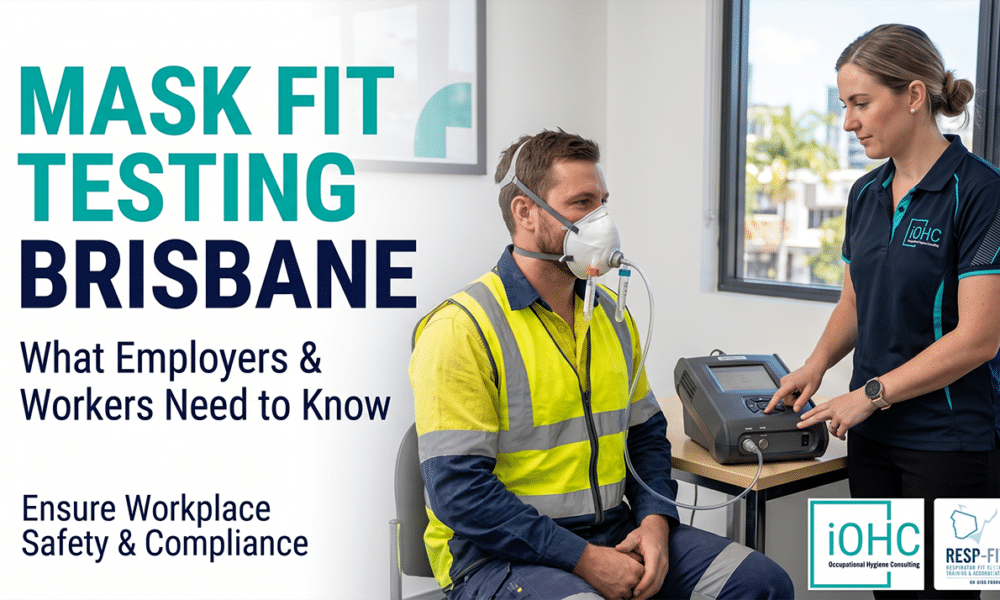
A qualitative fit test provides a pass/fail result based on the wearer’s detection of a test substance. Quantitative testing, by comparison, uses specialised equipment to measure leakage and provides a more objective assessment.
Safe Work Australia notes that quantitative testing can be used for half-face and full-face respirators and tight-fitting PAPRs, while full-face respirators and PAPRs should be fit tested quantitatively.
5. Results and Documentation
Once testing is completed, the result should be documented. Workers who pass the test should receive appropriate confirmation of their result, while employers should retain relevant records as part of their respiratory protection program.
What Is a Respirator Fit Test Checklist?
Having a respirator fit test checklist can help employers make sure important steps are not overlooked.
A practical checklist may include:
Before testing
- Identify workers who require respiratory protection.
- Assess the workplace airborne hazards.
- Select appropriate respirator types.
- Confirm the respirator make, model and size.
- Schedule fit testing with a competent provider.
- Inform workers about preparation requirements.
During testing
- Confirm the respirator is in suitable condition.
- Ensure the worker understands how to wear it correctly.
- Check the respirator’s positioning.
- Conduct the appropriate fit-testing.
- Identify and address any fit-test failure.
After testing
- Record the test result.
- Provide the worker with relevant documentation.
- Ensure workers understand correct respirator use.
- Establish when repeat testing may be required.
- Review respiratory protection arrangements when workplace conditions or equipment change.
This checklist can be incorporated into a wider respiratory protection program rather than being used as a replacement for a proper risk assessment.
Why Consider Onsite Respirator Fit Testing?
For organisations with multiple employees, arranging individual appointments away from the workplace can create scheduling challenges and unnecessary disruption.
Onsite respirator fit testing provides an alternative by allowing qualified consultants to conduct testing at the workplace.
This can be particularly useful for businesses with larger teams or workers who operate across different locations.
Benefits can include:
- Reduced employee travel time.
- Less disruption to normal operations.
- Easier coordination of multiple workers.
- Convenient testing for larger teams.
- The ability to organise testing around workplace schedules.
Onsite testing can also make it easier for employers to manage fit testing as part of their broader workplace health and safety processes.
IOHC provides both onsite and in-house respirator fit testing options for organisations across Brisbane and surrounding areas.
Why Choose Professional Respirator Fit Testing Services?
Respirator fit testing should be conducted by someone with appropriate knowledge, training, equipment and experience.
IOHC provides professional respirator fit testing services for industries including construction, healthcare, manufacturing, mining and quarrying. The company is RESP-FIT accredited and uses PortaCount 8048 equipment for quantitative respirator fit testing.
IOHC can test a range of respirators, including N95, half-face, full-face, PAPR and reusable respirators. Our consultants can also assist workplaces with respirator and cartridge selection based on workplace hazards and contaminant concentrations.
The service is provided in accordance with AS/NZS 1715:2009, which addresses the selection, use and maintenance of respiratory protective equipment.
How Often Should Respirator Fit Testing Be Repeated?
Fit testing should be repeated at least annually.
Repeat testing may be required when a worker is provided with a different make or model of respirator, when facial characteristics change in a way that could affect the seal, or when workplace requirements call for repeat testing.
Safe Work Australia guidance also indicates that fit testing should be repeated regularly based on the outcomes of a risk assessment and relevant workplace requirements.
Employers should therefore establish a process for tracking fit-test records and identifying when workers require retesting.
What Should Workers Do After Passing a Fit Test?
Passing a fit test confirms that the tested respirator can achieve an appropriate fit for that worker under the conditions of the test. It does not remove the need for workers to use the respirator correctly.
Workers should continue to:
- Perform the required fit check each time they put on the respirator.
- Follow workplace respiratory protection procedures.
- Keep the respirator clean and properly maintained.
- Replace filters or cartridges according to workplace procedures and manufacturer requirements.
- Report damaged or poorly fitting respiratory equipment.
- Inform your employer if changes may affect the respirator’s fit.
A successful fit test is therefore one part of maintaining effective respiratory protection throughout the worker’s time on the job.
What Should Workers Do After Passing a Fit Test?
Passing a fit test confirms that the tested respirator can achieve an appropriate fit for that worker under the conditions of the test. It does not remove the need for workers to use the respirator correctly.
Workers should continue to:
- Perform the required fit check each time they put on the respirator.
- Follow workplace respiratory protection procedures.
- Keep the respirator clean and properly maintained.
- Replace filters or cartridges according to workplace procedures and manufacturer requirements.
- Report damaged or poorly fitting respiratory equipment.
- Inform your employer if changes may affect the respirator’s fit.
A successful fit test is therefore one part of maintaining effective respiratory protection throughout the worker’s time on the job.
Book Mask Fit Testing in Brisbane
Effective respiratory protection starts with selecting the right equipment and confirming that it fits the person who will use it.
Whether you need individual testing, testing for a team or onsite respirator fit testing at your workplace, professional support can make the process more structured, practical and reliable.
IOHC provides RESP-FIT accredited quantitative respirator fit testing for workplaces across Brisbane and surrounding areas, with both onsite and in-house testing options.
To discuss your workplace requirements, respirator types or testing arrangements, visit the IOHC Respirator Fit Testing service or contact IOHC to speak with the team and arrange an appointment.
Disclaimer – The information in this blog is for informational purposes only and is not intended as medical/financial/legal advice. Always consult with a professional before making any decisions based on this information. No guarantees or warranties are expressed by IOHC about the accuracy of the information contained in the blogs.